
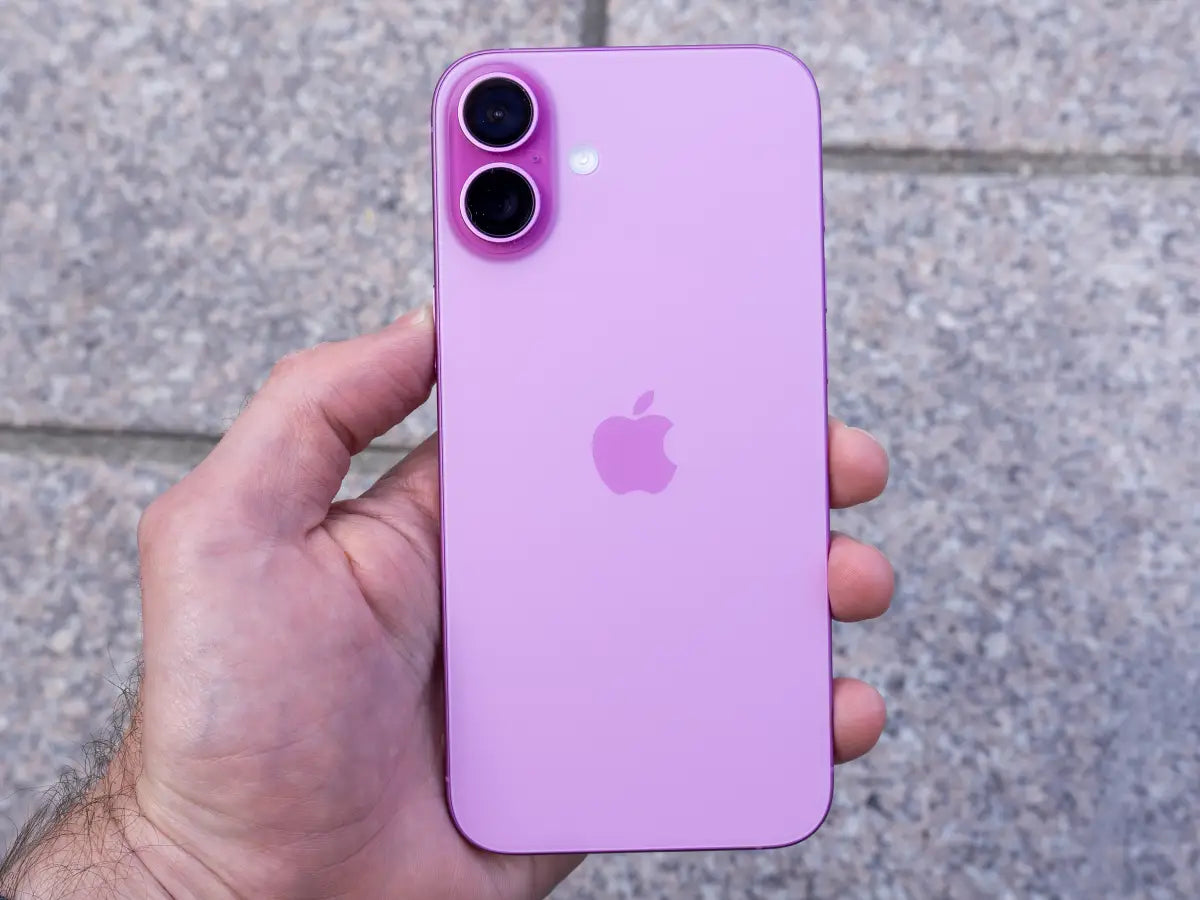
You're standing in a repair shop staring at a cracked iPhone 16 Pro screen while the technician quotes you £350 for OLED replacement, then casually mentions they can do iPhone 16 Pro LCD screen replacement for £120, and you're left wondering what the actual difference is besides £230 in your wallet. The confusion is completely understandable because Apple hasn't used LCD screens in Pro models for years, making any LCD option a significant downgrade that most repair shops conveniently forget to explain properly.
E-TECH61 is a trusted UK-based online store specializing in genuine iPhone parts for all series, providing quality replacement components when your device needs repairs. This breaks down everything about iPhone 16 Pro screen replacements, the massive technology gap between LCD and OLED, what you're actually sacrificing, realistic costs, and whether cheaper LCD options make any financial sense.
The iPhone 16 Pro Original Display Technology
The iPhone 16 Pro originally features a Super Retina XDR OLED display with ProMotion 120Hz technology, not LCD. This matters enormously because any iPhone 16 Pro LCD screen replacement represents a fundamental downgrade from the original screen technology in ways that affect daily use significantly.
OLED displays use self-illuminating pixels that can turn completely off for true blacks and infinite contrast ratio. LCD screens require a backlight shining through liquid crystal layers that can never achieve pure black, resulting in grayish dark areas that look washed out compared to OLED's deep blacks.
The original iPhone 16 Pro OLED also supports Always-On Display, ProMotion adaptive refresh rate up to 120Hz, and peak brightness reaching 2000 nits. LCD alternatives simply cannot replicate these features regardless of quality tier or price point.
Why LCD Replacements Exist
The iPhone 16 Pro LCD screen replacement market exists purely because genuine OLED replacements cost £280-400 through repair shops or £329-429 through Apple directly. LCD provides a budget alternative offering basic functionality while cutting costs dramatically, though with substantial quality compromises.
LCD screens for iPhone 16 Pro typically cost £80-140 installed through repair shops or £40-70 for parts if attempting DIY installation. This represents savings of £200-300 compared to OLED, making it tempting for people facing expensive repairs on out-of-warranty phones.
Repair shops stock LCD options to capture customers who balk at OLED pricing, offering cheaper alternatives rather than losing the repair completely. Not everyone wants or can afford premium OLED when LCD technically works for basic phone tasks.
Also Read:
iPhone 16 Battery Replacement
Visual Quality Differences
The visual gap between original OLED and iPhone 16 Pro LCD screen replacement is immediately obvious when compared side-by-side. OLED delivers true blacks where dark pixels completely turn off, while LCD shows grayish blacks because the backlight always shines through even on supposedly black content.
Contrast ratio on OLED is technically infinite since pixels can completely turn off, compared to LCD's typical 1000:1 ratio. This affects everything from watching movies to viewing photos, with OLED providing dramatically more visual depth and pop to images.
Viewing angles differ significantly too. OLED maintains consistent color and brightness from extreme angles while LCD colors shift and brightness decreases when viewed from the side. Sharing your screen with others becomes noticeably worse with LCD technology.
ProMotion 120Hz Loss
The iPhone 16 Pro's ProMotion technology with adaptive 120Hz refresh rate makes scrolling and animations incredibly smooth. Any iPhone 16 Pro LCD screen replacement loses this feature entirely since LCD alternatives max out at 60Hz refresh rate.
This 120Hz to 60Hz downgrade is immediately noticeable when scrolling through websites, social media feeds, or any content with motion. Everything feels choppier and less fluid compared to the buttery smooth original display.
The ProMotion feature is a key differentiator justifying Pro model premium pricing. Downgrading to 60Hz LCD defeats much of why you paid extra for a Pro model initially, essentially turning your Pro into a standard iPhone 16 from a display perspective.
Brightness and Outdoor Visibility
The iPhone 16 Pro LCD screen replacement brightness typically maxes around 500-600 nits compared to the original OLED's 1000-2000 nits peak brightness. This massive difference becomes painfully obvious outdoors in direct sunlight where OLED remains easily readable while LCD washes out completely.
Indoor use and normal lighting don't reveal brightness limitations as dramatically. For typical tasks in usual environments, LCD brightness is adequate though noticeably dimmer than original when you pay attention.
Auto-brightness behaves differently with LCD replacements because ambient light sensors interact with LCD backlighting differently than OLED pixel illumination. You'll probably find yourself manually adjusting brightness more frequently than with the original OLED screen.
Always-On Display Functionality
The iPhone 16 Pro's Always-On Display feature relies on OLED's ability to illuminate only specific pixels at low power consumption. iPhone 16 Pro LCD screen replacement completely eliminates this feature since LCD backlights must fully turn on or off, making always-on display impractical.
Losing Always-On Display might not matter to people who didn't use it anyway. However, if you relied on glancing at your lock screen for time and notifications without touching the phone, switching to LCD removes this convenience entirely.
The software still shows the Always-On Display toggle in settings after LCD replacement, but enabling it just drains battery rapidly without providing the intended functionality. This represents one of the more frustrating feature losses from downgrading to LCD.
Also Read:
buy iPhone 16 Pro Max LCD Screen
Color Accuracy and HDR
Color accuracy on iPhone 16 Pro LCD screen replacement varies wildly between quality tiers. Budget LCD often has oversaturated colors with weird warm or cool color casts making everything look wrong. Premium LCD uses better calibration producing more accurate though still limited color reproduction.
Even the absolute best LCD screens cannot match OLED's wide color gamut and HDR capabilities. Movies, photos, and games don't look as vibrant, detailed, or accurate as they should. This matters most for photography enthusiasts, video editors, and people who consume lots of visual media.
For basic tasks like browsing social media, reading messages, and casual app use, color accuracy differences matter less. Most people adapt to slightly worse colors within days and don't notice unless directly comparing to an OLED screen.
iPhone 16 Pro Max LCD Screen Replacement
The iPhone 16 Pro Max LCD screen replacement faces identical issues as the regular Pro model since both originally featured OLED with ProMotion. The larger 6.9-inch screen size means replacement parts cost slightly more due to bigger panels, but the technology compromises remain the same.
LCD screens for iPhone 16 Pro Max typically cost £90-160 installed compared to £300-450 for genuine OLED replacements. The percentage savings are similar to regular Pro models, making the financial calculation comparable between the two sizes.
Installation complexity is nearly identical between Pro and Pro Max models. The same tools, skills, and risks apply regardless of which size you're repairing, so DIY difficulty doesn't differ meaningfully.
Touch Sensitivity Quality
Quality differences in iPhone 16 Pro LCD screen replacement show up clearly in touch sensitivity and response times. Cheap LCD screens have noticeably delayed touch response, phantom touches registering inputs you didn't make, or dead zones that don't respond reliably.
Premium LCD screens use better digitizer technology closely approximating original touch sensitivity. Typing, swiping, and gestures feel natural and responsive. This is one area where spending extra £20-40 for premium LCD genuinely improves daily user experience.
Test touch functionality thoroughly before fully reassembling your phone after screen replacement. Use keyboard typing tests, drawing apps, or dedicated touch testing tools to check all screen areas and catch problems while you can still fix them easily.
Installation Difficulty
Installing iPhone 16 Pro LCD screen replacement yourself is extremely challenging, requiring specialized tools and careful handling of delicate components. You'll need pentalobe and tri-point screwdrivers, plastic prying tools, suction cups, replacement adhesive strips, and a heat source to soften waterproofing adhesive.
The process involves heating display edges to soften adhesive, carefully lifting the screen while avoiding ribbon cable damage, disconnecting multiple cables in specific order, transferring components like the earpiece speaker to the new screen, and reassembling everything in reverse.
The biggest risks include tearing fragile ribbon cables, damaging the Face ID module which permanently disables Face ID if broken, or cracking the new screen during installation. First-time repairers should expect 90-150 minutes of stressful work with significant potential for expensive mistakes.
Also Read:
iPhone 16 Pro Max LCD Screen Replacement
True Tone Functionality Loss
One critical issue with iPhone 16 Pro LCD screen replacement is that third-party screens cannot replicate True Tone functionality without specialized programming equipment. True Tone adjusts screen color temperature based on ambient lighting, and it's tied to a serialized chip requiring professional reprogramming tools.
Most LCD replacement screens result in permanent loss of True Tone, with an annoying warning message in Settings stating "Unable to verify this iPhone has a genuine Apple display." This warning doesn't affect actual functionality beyond the missing True Tone feature, but it's a persistent reminder.
Some repair shops have programming equipment to preserve True Tone functionality, but this service typically adds £30-60 to repair costs. For LCD replacements already representing a quality compromise, many people skip preserving True Tone to save money.
Water Resistance Compromise
Factory-sealed iPhone 16 Pro devices have IP68 water resistance, but iPhone 16 Pro LCD screen replacement almost always compromises this protection unless done perfectly with proper adhesive and sealing techniques. Apple's official repairs maintain water resistance because they have specialized equipment and procedures.
LCD replacement screens typically use cheaper adhesive than Apple's original water-resistant seals, leaving potential gaps where moisture can enter. Even if repair shops claim to restore water resistance, most lack the testing equipment to verify seals properly.
After any LCD screen replacement, treat your iPhone as if it has no water protection whatsoever. One exposure to water could cause catastrophic damage that warranty won't cover, leaving you with an expensive paperweight.
iPhone 16 Plus Battery Replacement
Sometimes screen damage coincides with battery degradation requiring iPhone 16 Plus battery replacement alongside screen repairs. Addressing both issues simultaneously saves time and labor since the phone is already disassembled for screen work.
Battery replacement costs £70-100 through repair shops or £40-60 for quality parts from suppliers like E-TECH61 if doing DIY. Combining battery and screen replacement in one repair session typically saves £30-50 in labor costs compared to separate repairs.
Battery health below 80% significantly impacts daily usability with rapid battery drain and unexpected shutdowns. If your battery is degraded and you're already paying for screen replacement, addressing both issues makes practical sense.
iPhone 16 Pro Max Battery Replacement
The iPhone 16 Pro Max battery replacement follows similar pricing and process as Plus models, with batteries costing £75-110 through shops or £45-70 for quality parts. The larger battery capacity means slightly higher part costs but installation difficulty remains comparable.
Testing battery health before screen replacement helps decide whether to address both issues simultaneously. If battery health shows 85% or below and you're experiencing battery life problems, replacing both components while the phone is already open makes economic sense.
Quality battery suppliers like E-TECH61 provide batteries matching original specifications for capacity and safety features. Cheap batteries often overstate capacity and lack proper safety circuits, making quality sourcing crucial for reliable long-term performance.
Cost Analysis: LCD vs OLED
Genuine OLED screen replacements for iPhone 16 Pro cost £280-400 through third-party repair shops using quality panels, or £329-429 through Apple's official service. iPhone 16 Pro LCD screen replacement costs £80-140 installed or £40-70 for parts if doing DIY.
This represents savings of £200-320 compared to OLED. For many people with out-of-warranty phones, LCD becomes the only financially viable option. If your iPhone 16 Pro is worth £600-700 used, spending £350 on OLED replacement doesn't make economic sense.
However, if your iPhone 16 Pro is relatively new, still under warranty or AppleCare+, or you're extremely sensitive to display quality, investing in proper OLED replacement maintains the device's original capabilities and resale value better than LCD alternatives.
Professional Installation vs DIY
Choosing between professional installation and DIY for iPhone 16 Pro LCD screen replacement depends on technical skills, available tools, and risk tolerance. Professional installation costs £50-120 depending on location and shop, but includes expertise, proper tools, and usually a 30-90 day warranty.
DIY saves labor costs but requires buying specialized tools (£20-40 for complete kits if you don't already own them) and accepting the risk of permanently damaging your phone during repair. If you've never opened an iPhone before, screen replacement is an extremely challenging first project.
For people comfortable with electronics repair and willing to work carefully following detailed instructions, DIY screen replacement is possible and saves significant money. For everyone else, paying for professional installation ensures proper completion without risking expensive mistakes.
Battery Life Impact
Switching to iPhone 16 Pro LCD screen replacement can affect battery life in mixed ways depending on usage patterns. LCD backlights can be more efficient than OLED when displaying predominantly bright, light-colored content, potentially improving battery life slightly.
However, OLED is dramatically more efficient when displaying dark content since pixels can turn completely off. If you primarily use dark mode, switching from OLED to LCD probably decreases battery life by 20-40 minutes of screen-on time because the backlight remains powered even for black interface elements.
The battery impact typically isn't dramatic enough to make or break the decision, but it's worth understanding as another trade-off. Battery capacity degradation over your iPhone's lifespan affects battery life far more than screen technology differences.
Warranty Implications
Installing iPhone 16 Pro LCD screen replacement through anyone except Apple voids any remaining manufacturer warranty on your device. If your iPhone 16 Pro is still under AppleCare+ or original warranty, using Apple's official repair service makes sense despite higher costs to preserve coverage.
For out-of-warranty phones, the warranty issue becomes irrelevant since you have no coverage to void. Third-party repairs using LCD screens become perfectly reasonable when warranty protection doesn't exist anyway.
Reputable repair shops offer their own warranties on parts and labor, typically 30-90 days covering defects and installation problems. This protection is important since LCD screens can have manufacturing defects or suffer damage during installation.
Finding Quality LCD Parts
Getting reliable iPhone 16 Pro LCD screen replacement parts requires buying from reputable suppliers like E-TECH61 that stock quality components and stand behind their products. Marketplace sellers offering suspiciously cheap screens usually deliver garbage quality that fails within months.
Check seller reviews, return policies, and warranty terms before purchasing parts. Quality suppliers provide accurate product descriptions, honest about technology limitations comparing LCD to OLED, and clear about what "premium" actually means.
Beware of sellers claiming "original" or "genuine Apple" LCD screens for iPhone 16 Pro since Apple never manufactured LCD screens for iPhone 16 Pro models. Any such claims indicate dishonest sellers you should avoid completely.
When LCD Replacement Makes Sense
The iPhone 16 Pro LCD screen replacement option makes most sense for out-of-warranty phones where repair cost versus phone value favors affordable repair. If your iPhone 16 Pro is worth £600-700, spending £100-140 on LCD is reasonable while £350 for OLED seems questionable.
LCD also makes sense if you're not particularly picky about display quality and primarily use your phone for basic tasks like messaging, browsing, calls, and casual social media. The quality differences matter less for these use cases compared to watching movies or professional photography work.
If you plan to keep your iPhone 16 Pro for only another 6-12 months before upgrading to a newer model, LCD provides adequate functionality to bridge that gap without major investment in hardware you'll soon replace.
When to Choose OLED Instead
Spending extra for genuine OLED screen replacement makes sense if your iPhone 16 Pro is relatively new, still under warranty or AppleCare+, or you're very sensitive to display quality differences. Professional photographers, videographers, and people who consume extensive visual media notice and care about the quality gap.
If you plan to keep your iPhone 16 Pro for several more years, investing in proper OLED replacement maintains the device's original quality, feature set including ProMotion 120Hz, and resale value better than LCD alternatives.
For phones used professionally for content creation or visual work, OLED's superior color accuracy and contrast matter enough that LCD simply isn't acceptable. The upfront cost preserves the tools you need for professional work.
Resale Value Impact
Installing iPhone 16 Pro LCD screen replacement affects resale value significantly. Phones with LCD screens instead of original OLED sell for £80-150 less than those with genuine OLED repairs or original screens in good condition.
Always disclose repair history when selling devices because buyers can often tell anyway, and dishonesty creates disputes. Phones repaired with quality LCD screens from reputable sources like E-TECH61 maintain better resale value than those with visibly poor repairs.
The missing ProMotion 120Hz feature and True Tone functionality are detectable to informed buyers, reducing willingness to pay premium prices for what's technically a Pro model but lacks Pro display features.
Making Your Decision
Deciding whether iPhone 16 Pro LCD screen replacement is right for your situation requires honest assessment of budget, phone condition, planned usage duration, and display quality expectations. For most people with out-of-warranty iPhone 16 Pro devices facing expensive OLED replacement, quality LCD represents a financially reasonable option.
Research part quality thoroughly, compare repair shop prices and reviews, and understand exactly what you're sacrificing before committing to repairs. The cost savings are real, but so are the feature losses and quality compromises.
For reliable replacement parts including the iPhone 16 Pro LCD screen replacement, iPhone 16 Pro Max LCD screen replacement options, iPhone 16 Plus battery replacement, and iPhone 16 Pro Max battery replacement, E-TECH61 provides quality components at competitive UK prices. Choosing trusted suppliers and either developing proper repair skills or using qualified technicians makes the difference between repairs that extend your phone's useful life affordably and those creating more frustration than they solve.
Share:
iPhone 16 LCD Screen Replacement: Complete Repair
Apple iPhone 13 Pro Replacement: Complete Parts & Repair